Videogiochi

The Darkest Night (1996)

1996 · J. Kintz · Edited by 1

Accedi per salvare la tua attività

Visti
0
Da vedere
0
Valutazioni
0
Voto medio
Preferiti
0

Trama

The Darkest Night is a graphical adventure game with a horror theme, set in the land of 'Tilorm'. The protagonist is a young anthropomorphic fox called 'Rolan', who is lost in a forest after an evening of heavy drinking with his friends, celebrating Hallows Eve. While sleeping it off in the woods, he is awakened by a tattered and bloody yelling man, who comes running up to you, collapsing but managing to tell you of an evil cult trying to release the Demon Yaxagiraw tonight, a netherworld being who was imprisoned in an old Abbey hundreds of years ago, but who could be released again during Hallows night, when the souls of the damned are close to our dimension. Having delivered his warning, the man dies and leaves you to prevent the cultists from achieving their goal.

Perché vederla?

Una proposta del 1996 incentrata su Adventure, DOS e Horror. Diretta da J. Kintz.

Per chi è?

Non consigliata se cerchi

  • Paranormale
  • Horror corporeo
  • Stregoneria
  • Bestiario

Influenze

  1. 1972
  2. 1979
  3. 1982
  4. 1982
  5. 1985
  6. 1996
    The Darkest Night

Similar games

The Dark Eye
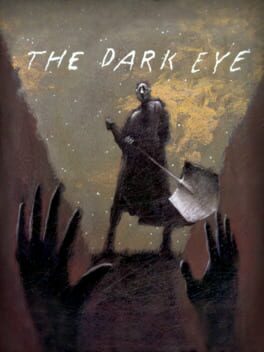
The Dark EyeThe Dark Eye is a computer game of the horror genre, released in 1995 for the PC by the now-defunct software company Inscape. Upon its release the game attracted little attention from either critics or consumers, though it has received some attention since and, arguably, cult status. The game featured combined 3-D graphics, stop motion animation and video segments. With its unconventional interface, storyline, and characters, the game's peculiarity became its selling point. The characters are largely lifelike in appearance except for their clay-modeled faces, which are often distorted or feature grotesquely exaggerated features. This near-realism, sometimes referred to as the uncanny valley, contributed to the game's ambience of unease and anxiety. The character animation is stop-motion. Inscape did the art design of the puppets (lead artist Bruce Heavin) and had a Hollywood house actually make them. Inscape then hired two stop-motion animators and Russell Lees spent many, many hours in a hot, dark warehouse directing the animations. The working hours were from 7 am to 7 pm for about a month. They created computer-generated screenshots of the environments and shot against blue-screen, and they had a director of photography light them to match the environment. Also notable was the use of author William S. Burroughs as a voice actor: Burroughs provided not only the voice for the character of Edwin, but also voiceovers of two slide-show sequences illustrating the short story "The Masque of the Red Death" and the poem "Annabel Lee". Another story, "The Premature Burial", can be found while reading the newspaper during "The Tell-Tale Heart", and the poem "To Helen" can be read while playing the victim in "Berenice". Thomas Dolby composed the game's music. ------------------- Structurally, the game was a point-and-click adventure fueled by the macabre stories of Edgar Allan Poe. The player could experience three of the stories ("The Cask of Amontillado", "The Tell-Tale Heart", and "Berenice") from the perspectives of both murderer and victim. The game presented no choices to make, no life-or-death decisions, and no points; similar to other point-and-click adventures like Myst, the game simply waited for the player to find the next hotspot or location, at which point another video would play to advance the plot. During the portions that were direct interpretations of Poe's stories, the player was constrained to follow the actions of the stories' characters. The player could carry only one item at a time. Much of the animation in The Dark Eye consisted of QuickTime movies, either full-screen or smaller looping segments framed by a static background. -------------------------

Doctor Hauzer
Doctor HauzerIn 1952, an Investigator (You) is searching for the archeologist Dr. Hauzer, who has disappeared. The Investigator finds a large house in the middle of nowhere that belonged to Dr. Hauzer. The home is built over an archeology site, with Doctor Hauzer having become obsessed with a deity named Kellbim. It is up to you to find Doctor Hauzer and what happened to his interns. One of the earliest Survival Horror games, Doctor Hauzer was released as a Japan exclusive for the 3DO by a development studio that was well-known for their detective\mystery visual novels, top-down RPGS, Point-&-Click Adventure games, and Japanese localizations of Western games like Prince of Persia up till this point. Doctor Hauzer was Riverhill Soft's first foray into 3D. Influenced by the successful Alone In The Dark, your character will navigate a fully 3D environment and die numerous times in the house's deadly traps, including some that are unavoidable for first time players. You have unlimited save games so you can view the death animations as part of the fun. You can switch the view between first-person, third-person, or overhead. Choosing a different view will help you overcome some traps, including some platforming. There are several major reasons why this game was never released outside Japan: It's relatively easy with no monsters to fight, is roughly 1-hour long, has an incredibly bad framerate that can get as low as 3 frames-per-second (the 4DO emulator can "overclock" the CPU up to 400%, making it less choppy), some music is plagurized like the theme song being a near identical copy of the Beetlejuice movie's theme, and was on a platform that was already failing in the West. An English fan translation is available, with only the FMV's remaining untranslated.