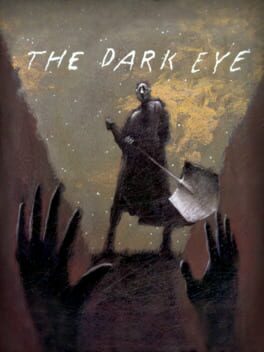
The Dark Eye (1995)The Dark Eye is a computer game of the horror genre, released in 1995 for the PC by the now-defunct software company Inscape. Upon its release the game attracted little attention from either critics or consumers, though it has received some attention since and, arguably, cult status.
The game featured combined 3-D graphics, stop motion animation and video segments. With its unconventional interface, storyline, and characters, the game's peculiarity became its selling point. The characters are largely lifelike in appearance except for their clay-modeled faces, which are often distorted or feature grotesquely exaggerated features. This near-realism, sometimes referred to as the uncanny valley, contributed to the game's ambience of unease and anxiety.
The character animation is stop-motion. Inscape did the art design of the puppets (lead artist Bruce Heavin) and had a Hollywood house actually make them. Inscape then hired two stop-motion animators and Russell Lees spent many, many hours in a hot, dark warehouse directing the animations. The working hours were from 7 am to 7 pm for about a month. They created computer-generated screenshots of the environments and shot against blue-screen, and they had a director of photography light them to match the environment.
Also notable was the use of author William S. Burroughs as a voice actor: Burroughs provided not only the voice for the character of Edwin, but also voiceovers of two slide-show sequences illustrating the short story "The Masque of the Red Death" and the poem "Annabel Lee". Another story, "The Premature Burial", can be found while reading the newspaper during "The Tell-Tale Heart", and the poem "To Helen" can be read while playing the victim in "Berenice".
Thomas Dolby composed the game's music.
-------------------
Structurally, the game was a point-and-click adventure fueled by the macabre stories of Edgar Allan Poe. The player could experience three of the stories ("The Cask of Amontillado", "The Tell-Tale Heart", and "Berenice") from the perspectives of both murderer and victim.
The game presented no choices to make, no life-or-death decisions, and no points; similar to other point-and-click adventures like Myst, the game simply waited for the player to find the next hotspot or location, at which point another video would play to advance the plot. During the portions that were direct interpretations of Poe's stories, the player was constrained to follow the actions of the stories' characters. The player could carry only one item at a time. Much of the animation in The Dark Eye consisted of QuickTime movies, either full-screen or smaller looping segments framed by a static background.
-------------------------